
Categories
Theory

5 Phases of Relationship Breakdown

Duck’s 5 Phases of Relationship Breakdown – Understanding the Stages of Separation

A Guide to the Emotional Process of Ending a Relationship

Introduction

Duck’s 5 Phases of Relationship Breakdown Theory offers a structured approach to understanding how romantic relationships deteriorate and eventually end.

Developed by psychologist Steve Duck, the theory describes breakup as a gradual, multi-phase process rather than a single event, highlighting that both partners undergo a series of emotional and social shifts.

This framework is divided into five distinct phases: Intra-Psychic, Dyadic, Social, Grave-Dressing, and Resurrection, each representing different stages of disengagement and personal transformation.

Duck introduced this model in the 1980s, based on his research into relationship dynamics and how people cope with the end of a partnership.

Duck noticed that breakups involve not just the loss of a romantic partner but a series of reflections and actions that allow individuals to regain personal stability.

The theory has since become a foundational concept in relationship psychology, providing insight into how people process dissatisfaction, manage conflict, and, ultimately, emerge from a breakup with a renewed sense of self.

The Phases

This phase, named Intra-Psychic (meaning within one’s own mind), is when an individual privately reflects on their dissatisfaction, weighing the pros and cons of staying.  

In simple words, One partner thinks about the problems on their own.  

Examples:  

1. A partner feels emotionally disconnected and wonders if the relationship is worth it.  

2. They start listing reasons why they are unhappy without mentioning it to their partner.  

3. One partner frequently daydreams about what life would be like without their partner.

The Dyadic phase (referring to two people) involves discussing relationship concerns directly with the partner.  

In simple words, The partners talk openly about their problems. 

Examples:  

1. A partner expresses feeling ignored and wants more attention.  

2. They talk about how their relationship goals no longer align.  

3. One partner suggests taking a break or going to couples counseling.

The Social phase involves sharing relationship issues with friends or family, seeking external support or validation.

In simple words, They tell friends and family about their relationship issues.

Examples:  

1. One partner confides in a friend about their desire to end things. 

2. Friends offer advice or opinions, influencing the partner’s decision. 

3. Family members express concern and ask about the couple’s future.

The Grave-Dressing phase is when individuals create a narrative of the relationship’s end to make sense of and emotionally accept the breakup.  

In simple terms, They make sense of the breakup and prepare to move on.  

Examples:  

1. A partner concludes that the relationship wasn’t meant to be and shares that view with others.  

2. They delete photos and memories associated with the relationship.  

3. One partner tells friends a version of the breakup story that makes them feel justified in their decision.

The Resurrection phase (meaning rebirth) involves recovering from the breakup, rediscovering personal identity, and preparing to form new relationships.  

Here, The partner starts moving on and focusing on personal growth.  

Examples:  

1. One partner pursues new hobbies or reconnects with friends.   

2. They start dating again and feel open to new possibilities. 

3. The individual reflects on lessons learned from the previous relationship to make healthier choices in the future.


Summary

Steve Duck’s 5 Phases of Relationship Breakdown Theory describes the gradual process of a relationship ending, highlighting emotional and social shifts.

This theory highlighting that both partners undergo a series of emotional and social shifts.

1. Resurrection Phase: The individual recovers, grows, and moves on.


Example: Sarah joins a fitness class and reconnects with friends, feeling ready to date again and more confident in making healthier choices in future relationships. 

2. Intra-Psychic Phase: One partner privately reflects on their dissatisfaction.


Example: Sarah feels unhappy in her relationship with John and begins to wonder if she’d be better off alone, but she doesn’t talk to him about it yet.

3. Dyadic Phase: The couple openly discusses their issues.


Example: Sarah talks to John about feeling disconnected and they discuss whether to work on the relationship or take a break.

4. Social Phase: The partners share their problems with friends and family.


Example: Sarah confides in her best friend about her troubles with John, and her friend suggests she might be happier without him.

5. Grave-Dressing Phase: Each person creates a narrative to make sense of the breakup.


Example: After breaking up, Sarah tells others it was a mutual decision, reflecting that the relationship wasn’t right for her. She also deletes photos of John from her phone.

Categories
Theory

Avoidant Attachment Style

Attachment Theory

In Attachment Theory, avoidant attachment is characterized by an individual’s discomfort with closeness and a tendency to prioritize independence and self-sufficiency over emotional intimacy. This style develops from early experiences where emotional needs were often ignored or met with rejection, leading the individual to suppress these needs.

Avoidant Attachment, In psychological terms, avoidant attachment describes a defensive approach to relationships, where individuals strive to maintain emotional distance, avoid vulnerability, and downplay the importance of relationships in order to protect themselves from potential rejection or hurt.

Reluctance to Depend on Others: This style indicates a preference for autonomy over intimacy and a reluctance to depend on or seek support from others.

Other Names

– Dismissive-Avoidant Attachment

– Insecure-Avoidant Attachment

– Dismissive Attachment

In Simple Words, Avoidant attachment is a relationship style where a person values independence over closeness, often keeping others at arm’s length. They prefer to rely on themselves, avoid deep emotional connections, and may feel uncomfortable when relationships get too close.

Signs of Avoidant Attachment

  1. Discomfort with emotional closeness and intimacy
  2. Prioritizing independence and self-reliance over partnership
  3. Avoiding deep conversations about emotions or the relationship
  4. Difficulty expressing feelings or showing vulnerability
  5. Emotionally distancing themselves when situations become intimate
  6. Disinterest in commitment or serious relationships
  7. Fear of relying on others or feeling dependent
  8. Being uncomfortable with displays of affection from others
  9. Downplaying the importance of relationships
  10. Tendency to withdraw or avoid their partner when stressed

Examples of Behaviors in Relationships

  1. Keeping conversations surface-level and avoiding deep topics.
  2. Downplaying their own emotions and avoiding sharing personal feelings.
  3. Being reluctant to express affection openly, like saying “I love you.”
  4. Avoiding conflict by withdrawing rather than addressing issues.
  5. Keeping the relationship casual without serious commitments.
  6. Spending significant time alone to maintain distance.
  7. Pulling away physically when their partner shows affection.
  8. Being vague about future plans or avoiding long-term commitments.
  9. Keeping personal problems private, refusing to seek support.
  10. Sabotaging relationships if they feel too close.

Things They Say in Their Relationship

  1. “I don’t need anyone to feel complete.”
  2. “Why do we need to talk about everything?”
  3. “I just need my own space right now.”
  4. “I don’t like talking about feelings.”
  5. “Commitment isn’t really my thing.”
  6. “I’m fine; I don’t need any help.”
  7. “You’re being too clingy.”
  8. “Let’s just keep things casual.”
  9. “I don’t want to rely on anyone.”
  10. “Relationships are overrated.”

Summary

Avoidant attachment often leads individuals to keep relationships at arm’s length, resist emotional dependency, and focus on personal independence, which can create challenges for deep connection in relationships.

_

Categories
Theory

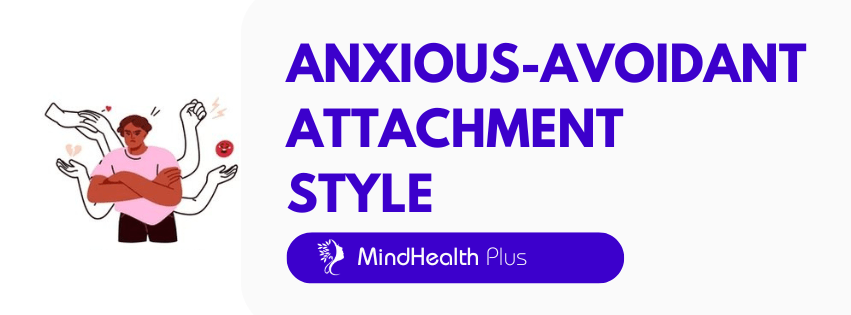
Anxious-Avoidant Attachment Style

Attachment Theory

Within Attachment Theory by John Bowlby and Mary Ainsworth, anxious-avoidant attachment (sometimes just “avoidant attachment”) is characterized by a mix of fear of intimacy and fear of abandonment. Individuals with this style desire closeness but push others away, avoiding true intimacy to protect themselves from potential rejection or hurt.

Anxious-Avoidant Attachment, In psychological literature, it refers to a relationship style where individuals have difficulty trusting others and fear closeness, leading them to suppress emotional needs even though they often feel a deep, underlying need for connection.

Discomfort with Dependence: This style often represents ambivalence toward relationships, marked by a struggle between a desire for intimacy and a fear of being vulnerable or dependent.

Other Names

– Fearful-Avoidant Attachment

– Avoidant Attachment with Anxiety

– Insecure-Ambivalent Attachment

In Simple Words, Anxious-avoidant attachment is a relationship style where a person feels mixed emotions – wanting closeness but fearing it at the same time. They want connection but worry about being hurt or rejected, so they keep their guard up and often avoid deep intimacy.

Signs of Anxious-Avoidant Attachment

  1. Desire for closeness but discomfort with emotional intimacy
  2. Difficulty trusting others or being vulnerable
  3. Fear of being hurt or rejected if they open up
  4. Pulling away or shutting down** when things get emotionally intense
  5. Conflicting behaviors, such as seeking affection but then pushing it away
  6. Avoiding deep conversations about feelings or the relationship
  7. Fear of commitment and long-term attachment
  8. Emotionally distancing themselves from their partner
  9. Self-sufficiency and preference for independence
  10. Feeling “trapped” when things get too close or committed

Examples of Behaviors in Relationships

  1. Withdrawing or shutting down emotionally during arguments.
  2. Avoiding conversations about relationship status or future plans.
  3. Showing affection inconsistently, sometimes being loving and other times distant.
  4. Pulling away physically (like avoiding hugs) when feeling vulnerable.
  5. Rejecting partner’s attempts at closeness to keep emotional distance.
  6. Using distractions or staying busy to avoid intimacy.
  7. Ghosting or disappearing temporarily if feeling overwhelmed.
  8. Withholding affection as a way to maintain control.
  9. Avoiding labels or commitments in the relationship.
  10. Sabotaging the relationship if it starts to feel too close.

Things They Say in Their Relationship

  1. “I need some space.”
  2. “I don’t want to talk about it right now.”
  3. “I’m not ready for a serious commitment.”
  4. “I can handle things on my own.”
  5. “Why do we need to label our relationship?”
  6. “I don’t like talking about feelings.”
  7. “I feel trapped when things get too serious.”
  8. “Let’s not get too attached.”
  9. “Sometimes I just don’t know if I can trust anyone.”
  10. “I don’t want to rely on anyone but myself.”

Summary

Anxious-avoidant attachment creates a push-and-pull dynamic in relationships, where a person wants connection but fears it deeply, leading to cycles of closeness and withdrawal.

_

Categories
Theory

Anxious Attachment Style

Attachment Theory

In the framework of Attachment Theory by John Bowlby and Mary Ainsworth, anxious attachment style is a bond where individuals seek a high level of intimacy and approval from their partner but simultaneously fear abandonment and rejection. This style is often marked by dependence, worry, and fear of loss in relationships.

Anxious Attachment, According to psychological definitions, anxious attachment involves preoccupation with closeness and hypervigilance about relationship security, where individuals may feel a persistent need for reassurance from their partner.

Emotional Dependence: It represents a tendency toward emotional dependence on a partner, where self-worth may be highly tied to the relationship, and there is often a need for frequent validation.

Other Names

– Preoccupied Attachment

– Anxious-Preoccupied Attachment

– Insecure-Anxious Attachment

In Simple Words, Anxious attachment is a style where a person feels constantly worried that their partner might leave or stop loving them. They seek constant closeness, approval, and reassurance and may feel insecure if they don’t get it.

Signs of Anxious Attachment

  1. Constant need for reassurance and validation from a partner
  2. Fear of abandonment or rejection
  3. High emotional sensitivity and quick reactions to changes in the partner’s behavior
  4. Preoccupation with the relationship, often thinking about it frequently
  5. Difficulty being alone or feeling independent
  6. Overanalyzing interactions and fearing negative outcomes
  7. Clinginess or possessiveness
  8. Jealousy or insecurity about the partner’s other relationships
  9. Self-worth tied to the partner’s attention and approval
  10. High levels of anxiety and worry when the partner is unavailable

Examples of Behaviors in Relationships

  1. Frequently texting or calling their partner to check in.
  2. Seeking constant reassurance about the relationship, asking, “Do you still love me?”
  3. Feeling hurt or panicked if their partner doesn’t respond quickly.
  4. Overreacting to minor issues or conflicts.
  5. Becoming upset when their partner wants time alone or with friends.
  6. Reading into the partner’s actions for signs of trouble.
  7. Compromising personal needs or values to keep the partner happy.
  8. Feeling anxious and insecure when away from the partner.
  9. Clinging or being overly affectionate to avoid distance.
  10. Struggling with jealousy of anyone close to the partner, such as friends or family.

They Say in Their Relationship

  • “Are you sure you still love me?”
  • “Why didn’t you text me back right away?”
  • “I’m afraid you’re going to leave me.”
  • “Do you miss me when I’m not around?”
  • “I don’t want you to go out without me.”
  • “I feel like you don’t care about me as much as I care about you.”
  • “Please don’t be mad at me.”
  • “I don’t know what I’d do if you ever left me.”
  • “I’m worried you’ll find someone better.”
  • “Why do you need so much space?”

Summary

Anxious attachment often leads to emotional dependency, a need for constant validation, and a fear of being alone or abandoned, which can create tension in relationships.

_

Categories
Theory

Secure Attachment Style

Attachment Theory

In the framework of Attachment Theory by John Bowlby and Mary Ainsworth, a secure attachment style is a bond in which individuals feel comfortable both giving and receiving support, and they trust that their needs will be met. This bond is marked by a balance between intimacy and autonomy.

Secure Attachment Defined by the American Psychological Association, secure attachment is a type of emotional bond that promotes a healthy, balanced relationship where one feels confident and secure in their partner’s support and availability, even when separated.

Emotional Security: It represents emotional security within relationships, where individuals feel safe to express themselves and are free from the fear of abandonment.

Other Names

– Autonomous Attachment

– Trust-Based Attachment

– Stable Attachment

In Simple Words, Secure attachment is a relationship style where you feel safe, valued, and confident that your partner will be there for you. You can express your feelings openly, communicate clearly, and respect each other’s needs for space and closeness.

Signs of Secure Attachment:

  1. Comfort with intimacy and closeness
  2. Trust in the partner’s support and availability
  3. Good communication skills
  4. Ability to handle disagreements calmly
  5. Sense of independence within the relationship
  6. Open to vulnerability and showing true self
  7. Reliability in fulfilling commitments
  8. Healthy self-esteem and positive self-view
  9. Emotional regulation in times of stress
  10. Ability to support partner without feeling burdened

Examples of Behaviors in Relationships

  1. Expressing needs and feelings directly without fear.
  2. Apologizing and taking responsibility when mistakes are made.
  3. Offering comfort and reassurance when a partner is stressed.
  4. Enjoying time alone without feeling insecure or worried about the relationship.
  5. Seeking compromise in conflicts rather than trying to win.
  6. Encouraging the partner’s personal goals and growth.
  7. Regularly checking in to see how the partner is feeling.
  8. Setting and respecting boundaries in a positive way.
  9. Communicating openly about future plans.
  10. Listening actively without interrupting or judging.

Things They Say in Their Relationship

  1. “I trust you completely.”
  2. “I’m here whenever you need to talk.”
  3. “I love spending time with you, but I also enjoy my time alone.”
  4. “Let’s work together to figure this out.”
  5. “Tell me what you’re feeling; I want to understand.”
  6. “I believe in you and support your goals.”
  7. “I apologize for that. I’ll do better next time.”
  8. “I love you for who you are.”
  9. “Thank you for being there for me.”
  10. “Let’s plan for our future together.” 

Summary

A secure attachment style fosters a partnership built on trust, emotional safety, and independence, allowing each partner to be their authentic selves.

_

Categories
Theory

Triangular Theory of Love

Triangular Theory of Love

The Sternberg Theory of Love, also known as the Triangular Theory of Love, was proposed by psychologist Robert Sternberg in the late-1980s.

Sternberg aimed to understand and categorize different types of love by breaking it down into essential components, believing that love is more complex than a single emotion. His theory became a foundational framework in understanding romantic relationships and broader human connections.

Introduction

Sternberg’s Triangular Theory of Love posits that love can be understood as comprising three key components: Intimacy, Passion, and Commitment.

These three elements interact in different ways to form distinct types of love, ranging from friendship and infatuation to consummate love.

Each component represents a different facet of love, and varying combinations of these components lead to the formation of different kinds of relationships. Sternberg’s model is called triangular” because each of the three components can be visualized as points on a triangle, which collectively represent the complex structure of love.

In Short, The Triangular Theory of Love suggests that love is made up of three parts: closeness (intimacy), attraction (passion), and dedication (commitment).

Different types of love are created depending on how these three elements mix together.

This model helps us understand why relationships feel different, like how a best friend’s love is different from a romantic partner’s. Components of the Triangular Theory of Love

1. Intimacy

Intimacy is the emotional component of love. It involves feelings of closeness, connectedness, and bondedness. In relationships where intimacy is the dominant factor, individuals feel a strong sense of understanding, trust, and affection for one another, but it may not necessarily include sexual or romantic attraction.

Intimacy is about feeling close and connected to someone. It’s the warmth and affection that come from truly knowing each other and feeling understood.

Examples:
  • Best friends who share their deepest secrets and understand each other completely but are not romantically involved.
  • A mentor-mentee relationship where there is mutual respect, trust, and care but no romantic feelings.

2. Passion

Passion represents the motivational component of love and is associated with physical attraction and sexual desire. It encompasses the intense emotions, physical attraction, and arousal one feels towards another. When passion is dominant, the relationship may be characterized by infatuation or strong romantic and physical attraction.

Passion is the spark and excitement in a relationship. It’s the romantic and physical attraction that makes people want to be close and affectionate.

Examples:

  • A couple who has just started dating and feels intense attraction and excitement whenever they are together.
  • A “crush” on someone based mainly on physical attraction, even if there is no deep connection.

3. Commitment

Commitment is the cognitive component of love, involving the decision to remain together and plan for a shared future. This aspect involves making a conscious choice to stay in the relationship and maintain it despite challenges. Commitment is what sustains a relationship over time, contributing to its longevity and stability.

Commitment is the decision to stay with someone for the long term. It’s the promise to keep the relationship going, even when things get tough.

Examples:

  • Partners who have promised to stay together and work through conflicts, regardless of the ups and downs.
  • A long-distance couple who are committed to each other and plan for a future together despite physical separation.

Types of Love in the Triangular Theory

By combining these three components, Sternberg identifies seven types of love:

1. Non-Love: Absence of all three components.

2. Liking: Presence of intimacy only (e.g., friendships).

3. Infatuation: Presence of passion only (e.g., crushes).

4. Empty Love: Presence of commitment only (e.g., staying together out of obligation).

5. Romantic Love: Combination of intimacy and passion (e.g., new relationships).

6. Companionate Love: Combination of intimacy and commitment (e.g., long-term friendships or family bonds).

7. Consummate Love: Combination of intimacy, passion, and commitment (e.g., a deep, enduring romantic relationship).

In-Depth Explanations

7 Types of Love in Sternberg’s Triangular Theory of Love

1. Non-Love

Non-love refers to relationships where none of the three components – intimacy, passion, or commitment – are present. It describes casual interactions or acquaintances with no deeper connection.

Non-love is when there is no closeness, attraction, or commitment between people, like everyday interactions with strangers or acquaintances.

Examples:

  • A brief interaction with a store clerk during a purchase.
  • An occasional greeting to a neighbor without any personal connection.

2. Liking (Intimacy Only)

Liking involves only intimacy, meaning a strong bond or friendship exists without romantic passion or long-term commitment.

Liking is a close friendship where people feel connected but don’t have romantic feelings or long-term plans together.

Examples:

  • Best friends who share secrets, support each other, and genuinely care without romantic attraction.
  • A close college friend you stay in touch with, but there’s no romantic or committed relationship.

3. Infatuation (Passion Only)

Infatuation is driven purely by passion, characterized by intense attraction and desire without a deep emotional connection or commitment.

Infatuation is a crush or attraction where there’s excitement and physical attraction but no closeness or long-term plans.

Examples:

  • A fleeting crush on a celebrity based on looks or charisma.
  • A strong initial attraction to someone you just met but don’t know well.

4. Empty Love (Commitment Only)

Empty love is based solely on commitment without intimacy or passion, often seen in relationships that have lost their closeness and romance.

Empty love is staying together out of obligation, even if the closeness and attraction are gone.

Examples:

  • A marriage that continues for the sake of family, despite lost affection and attraction.
  • An arranged marriage where the couple is committed but hasn’t yet developed intimacy or passion.

5. Romantic Love (Intimacy + Passion)

Romantic love combines intimacy and passion, creating a relationship with emotional closeness and physical attraction, but without a long-term commitment.

Romantic love is when people feel close and attracted to each other but haven’t committed to a future together.

Examples:

  • A couple dating and enjoying each other’s company but without planning a long-term future yet.
  • A summer romance where two people are emotionally connected and physically attracted without lasting plans.

6. Companionate Love (Intimacy + Commitment)

Companionate love combines intimacy and commitment, often seen in long-term friendships or relationships where passion has faded but there’s a deep bond and dedication.

Companionate love is a strong, steady connection with someone, where there’s closeness and commitment but no romantic attraction.

Examples:

A married couple who deeply care for each other but have lost the initial romantic spark.

Close friends or siblings who are bonded and dedicated to supporting each other.

7. Consummate Love (Intimacy + Passion + Commitment)

Consummate love includes all three components – intimacy, passion, and commitment. It’s often considered the most fulfilling and ideal form of love.

Consummate love is a deep, balanced relationship with closeness, attraction, and a strong commitment to each other.

Examples:

  • A long-term married couple who still share a deep emotional connection, physical attraction, and life-long commitment.
  • A couple who actively support each other’s goals, share mutual attraction, and are committed to a future together.

Design a site like this with WordPress.com
Get started