
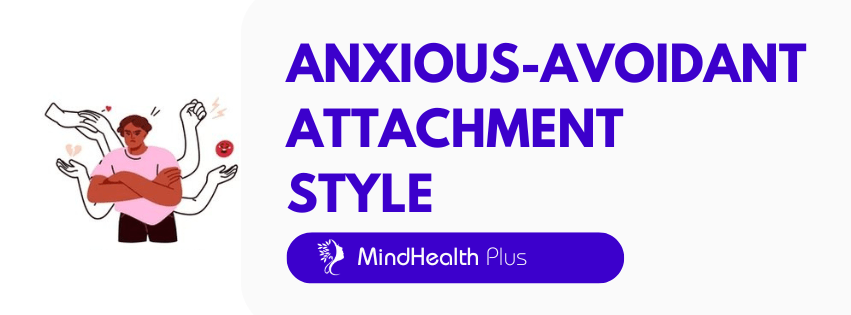
Attachment Theory
Within Attachment Theory by John Bowlby and Mary Ainsworth, anxious-avoidant attachment (sometimes just “avoidant attachment”) is characterized by a mix of fear of intimacy and fear of abandonment. Individuals with this style desire closeness but push others away, avoiding true intimacy to protect themselves from potential rejection or hurt.
Anxious-Avoidant Attachment, In psychological literature, it refers to a relationship style where individuals have difficulty trusting others and fear closeness, leading them to suppress emotional needs even though they often feel a deep, underlying need for connection.
Discomfort with Dependence: This style often represents ambivalence toward relationships, marked by a struggle between a desire for intimacy and a fear of being vulnerable or dependent.
Other Names
– Fearful-Avoidant Attachment
– Avoidant Attachment with Anxiety
– Insecure-Ambivalent Attachment
In Simple Words, Anxious-avoidant attachment is a relationship style where a person feels mixed emotions – wanting closeness but fearing it at the same time. They want connection but worry about being hurt or rejected, so they keep their guard up and often avoid deep intimacy.
Signs of Anxious-Avoidant Attachment
- Desire for closeness but discomfort with emotional intimacy
- Difficulty trusting others or being vulnerable
- Fear of being hurt or rejected if they open up
- Pulling away or shutting down** when things get emotionally intense
- Conflicting behaviors, such as seeking affection but then pushing it away
- Avoiding deep conversations about feelings or the relationship
- Fear of commitment and long-term attachment
- Emotionally distancing themselves from their partner
- Self-sufficiency and preference for independence
- Feeling “trapped” when things get too close or committed
Examples of Behaviors in Relationships
- Withdrawing or shutting down emotionally during arguments.
- Avoiding conversations about relationship status or future plans.
- Showing affection inconsistently, sometimes being loving and other times distant.
- Pulling away physically (like avoiding hugs) when feeling vulnerable.
- Rejecting partner’s attempts at closeness to keep emotional distance.
- Using distractions or staying busy to avoid intimacy.
- Ghosting or disappearing temporarily if feeling overwhelmed.
- Withholding affection as a way to maintain control.
- Avoiding labels or commitments in the relationship.
- Sabotaging the relationship if it starts to feel too close.
Things They Say in Their Relationship
- “I need some space.”
- “I don’t want to talk about it right now.”
- “I’m not ready for a serious commitment.”
- “I can handle things on my own.”
- “Why do we need to label our relationship?”
- “I don’t like talking about feelings.”
- “I feel trapped when things get too serious.”
- “Let’s not get too attached.”
- “Sometimes I just don’t know if I can trust anyone.”
- “I don’t want to rely on anyone but myself.”
Summary
Anxious-avoidant attachment creates a push-and-pull dynamic in relationships, where a person wants connection but fears it deeply, leading to cycles of closeness and withdrawal.
_

 MindHealth Plus